

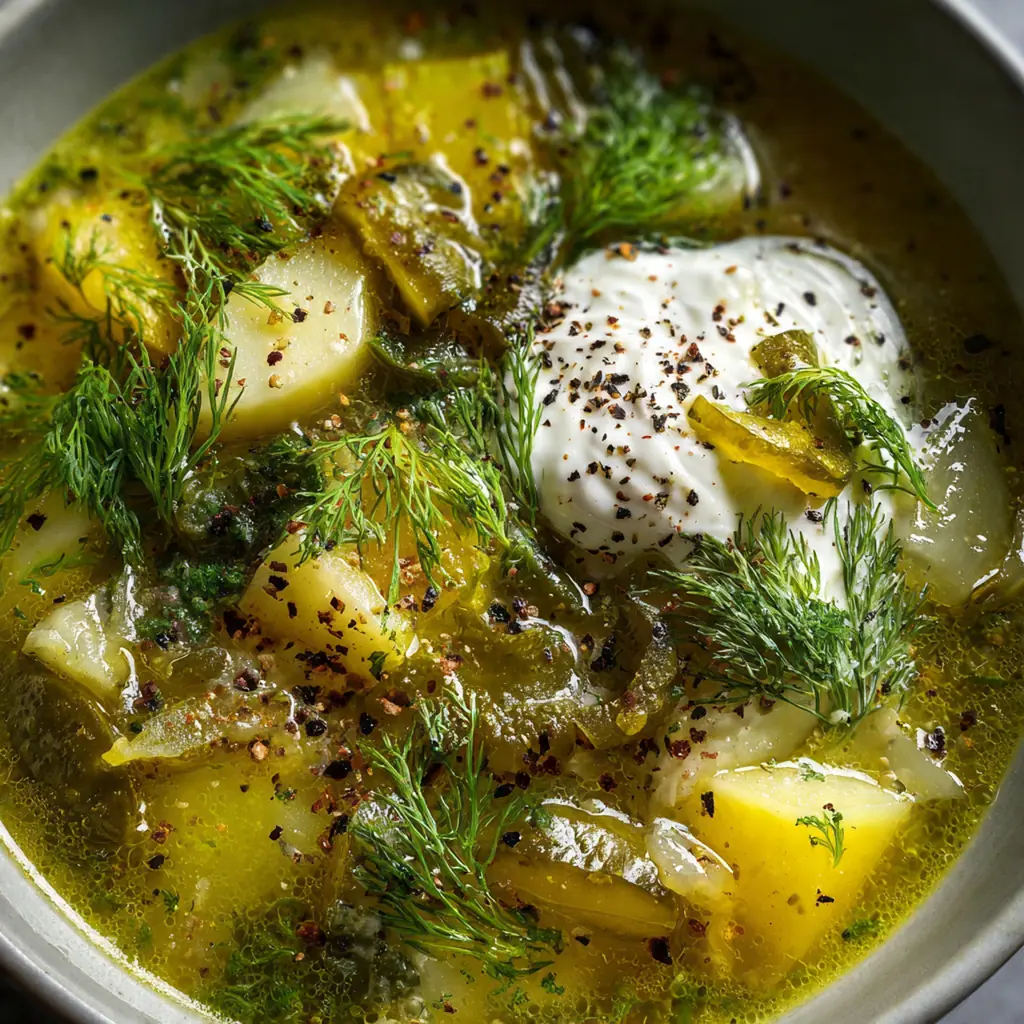
This creamy Dill Pickle Soup is a tangy Polish comfort food classic that’s been a cherished part of my family’s table for generations. It’s the ultimate cozy meal, blending bright pickle flavor with a rich, creamy base and tender vegetables. You’ll be amazed at how such a unique and satisfying soup comes together in under an hour with simple, humble ingredients. It’s the perfect way to warm up and use up that jar of pickles sitting in your fridge.
Why You'll Love This Recipe
- It’s a uniquely tangy twist on classic comfort food
- The creamy texture is incredibly hearty and satisfying
- Comes together in under an hour with pantry staples
- Perfect for using up leftover pickles and brine
- My grandma’s secret is the tempered sour cream
Ingredients You’ll Need
- Unsalted butter: for sautéing the vegetables and building a rich base this gives you control over the soup’s salt level since the pickles add plenty.
- Yellow onion: provides a sweet, aromatic foundation that mellows as it cooks dice it evenly so it softens at the same rate as the carrots.
- Carrots: add sweetness and a pop of color alongside a satisfying texture look for firm, bright orange carrots without any soft spots.
- Celery stalks: contribute an essential savory depth and earthiness that balances the tang use the inner stalks for a more tender result.
- Garlic: minced finely for a pungent, aromatic kick that enhances all the other flavors fresh cloves are always better than pre-minced.
- All-purpose flour: acts as the thickening agent to give the soup its creamy body cooking it with the butter coats the veggies and eliminates the raw taste.
- Vegetable broth: forms the liquid base of the soup a good quality broth makes a noticeable difference in the final flavor.
- Potatoes: peeled and cubed they break down slightly to naturally thicken the soup while providing soft, comforting bites.
- Dill pickles: the star of the show use classic, sour dill pickles for authentic flavor and avoid any sweet or bread-and-butter varieties.
- Dill pickle brine: this is where the signature tang comes from don’t skip it as it builds layers of flavor.
- Bay leaf: adds a subtle, herbal complexity that simmers in the background remember to remove it before serving.
- Sour cream: at room temperature it creates the luxurious, creamy finish tempering it first prevents any unfortunate curdling.
- Fresh dill: chopped for a burst of herby freshness that complements the pickles perfectly dried dill just can’t compare.
- Black pepper: adds a gentle warmth and rounds out all the other flavors freshly cracked is always best.
- Salt: use it to taste at the very end the pickles and brine already contribute a lot of saltiness.
How to Make It
Sauté the Aromatics:
Melt your butter in a large, heavy-bottomed pot over medium heat. Toss in the diced onion, carrots, and celery and let them cook, stirring now and then, until they just start to soften. This step builds a flavorful foundation for your dill pickle soup and unlocks the natural sweetness in the veggies.
Add Garlic and Flour:
Stir in the minced garlic and let it cook for about a minute until it smells incredible. Then, sprinkle the flour all over the vegetables and stir constantly for another minute or two. You’re cooking off that raw flour taste and creating a roux to thicken the soup later.
Gradually Add Broth:
Slowly pour in the vegetable broth while whisking continuously. This is the key to a smooth, lump-free soup base. Once the broth is incorporated, add in your cubed potatoes, diced pickles, pickle brine, and that single bay leaf.
Simmer Until Tender:
Bring the whole pot to a gentle boil, then immediately reduce the heat to low and cover it. Let it simmer quietly for 15 to 20 minutes. You’ll know it’s ready when the potatoes are tender enough to pierce easily with a fork.
Temper the Sour Cream:
This is the most crucial step for a creamy texture. Scoop a ladleful of the hot soup into a bowl with your room-temperature sour cream and whisk them together until completely smooth. This slowly raises the temperature of the sour cream so it won’t curdle when you add it back to the pot.
Finish the Soup:
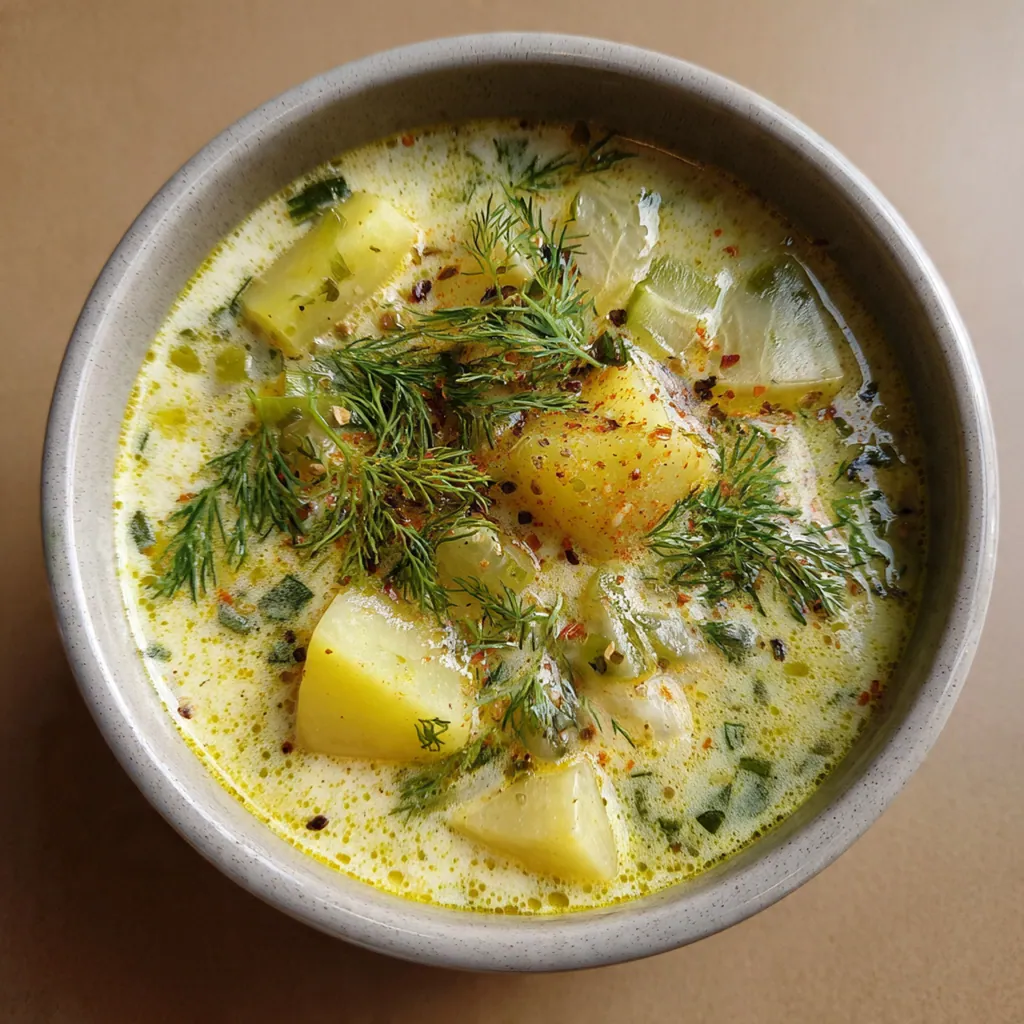
Take the pot off the heat and slowly stir the tempered sour cream mixture back in. Add the fresh dill and black pepper, then give it a taste before adding any salt. Let it simmer on the lowest heat for five more minutes to let the flavors marry, but don’t let it boil.
Serve Immediately:
Fish out the bay leaf and discard it. Ladle the hot soup into bowls and get ready to garnish. I like to add an extra dollop of sour cream and a sprinkle of fresh dill right on top.
You Must Know
- Tempering the sour cream is non-negotiable
- Good quality dill pickles make the soup
- Fresh dill beats dried every single time
- Always taste before adding extra salt
- I’ve learned this the hard way
Storage Tips
Store any leftover dill pickle soup in an airtight container in the refrigerator, where it will stay good for up to three days. When you’re ready to enjoy it again, reheat it gently on the stovetop over low heat, stirring often. You must avoid bringing it to a boil once the sour cream is added, as high heat can cause it to separate and look grainy. This soup doesn’t freeze well because the dairy and potatoes can become watery and change texture when thawed, so it’s best enjoyed fresh or within a couple days.
Ingredient Substitutions
If you need a gluten-free version, simply swap the all-purpose flour for a one-to-one gluten-free baking blend—it thickens just as well. For a dairy-free soup, use olive oil instead of butter and replace the sour cream with a plain, unsweetened cashew or coconut-based alternative, just be sure to temper it the same way. In a pinch, you can use dried dill weed, but since it’s more concentrated, start with about half the amount and adjust to your taste. While vegetable broth keeps it vegetarian, a light chicken broth works beautifully if that’s what you have on hand.
Serving Suggestions
This soup is a meal all on its own, especially with a thick slice of crusty rye or sourdough bread for dipping into the creamy broth. For a fuller Polish-inspired meal, start with a bowl before moving on to main dishes like potato pierogi or a simple roasted chicken with herbs. I also love it with a light, crisp side salad dressed with a simple vinaigrette to cut through the richness. Don’t forget the classic garnishes—a final dollop of sour cream, extra fresh dill, and even some buttery croutons for crunch make it feel extra special.
Cultural Context
Known as ‘zupa ogórkowa’ in Poland, this dill pickle soup is a beloved staple often found on family tables and in traditional milk bars. It’s a brilliant example of Polish resourcefulness, transforming humble, pantry-ready ingredients like pickles and their brine into something deeply comforting and flavorful. This soup embodies the heart of Polish home cooking—rustic, hearty, and designed to nourish, especially during colder months. While recipes vary from family to family, the harmonious balance of tangy, creamy, and savory is a constant that has made it a cherished classic for generations.

Pro Tips
- Use the brine from your pickle jar for maximum flavor
- Let the soup sit for 10 minutes after cooking
- Mash a few potatoes against the pot to thicken it
- My secret is a tiny pinch of sugar to balance
- It’s a game-changer
Frequently Asked Questions
Traditional Polish dill pickles (ogórki kiszone) or any classic, flavorful dill pickle are ideal. Avoid sweet or bread-and-butter pickles. Using their brine is essential for the authentic, tangy flavor that defines this creamy soup.
Yes, you can prepare it a day in advance. Store the soup base (without the tempered sour cream) in the fridge. Reheat gently and stir in the sour cream mixture just before serving for the best, freshest texture and flavor.
For a similar tangy creaminess, full-fat plain Greek yogurt or crème fraîche can work. For a dairy-free option, try a plain, unsweetened cashew or oat-based sour cream alternative, though the flavor profile will change slightly.
The soup is ready when the potatoes and carrots are fork-tender, which takes about 15-20 minutes of simmering. The final consistency should be thick and creamy. Always do a final taste and adjust salt or tanginess with extra pickle brine if needed.
Serve it with a slice of hearty rye or crusty bread for dipping. It’s a complete meal on its own but pairs wonderfully with a simple Polish cucumber salad or a kielbasa sandwich for a more substantial dinner.