

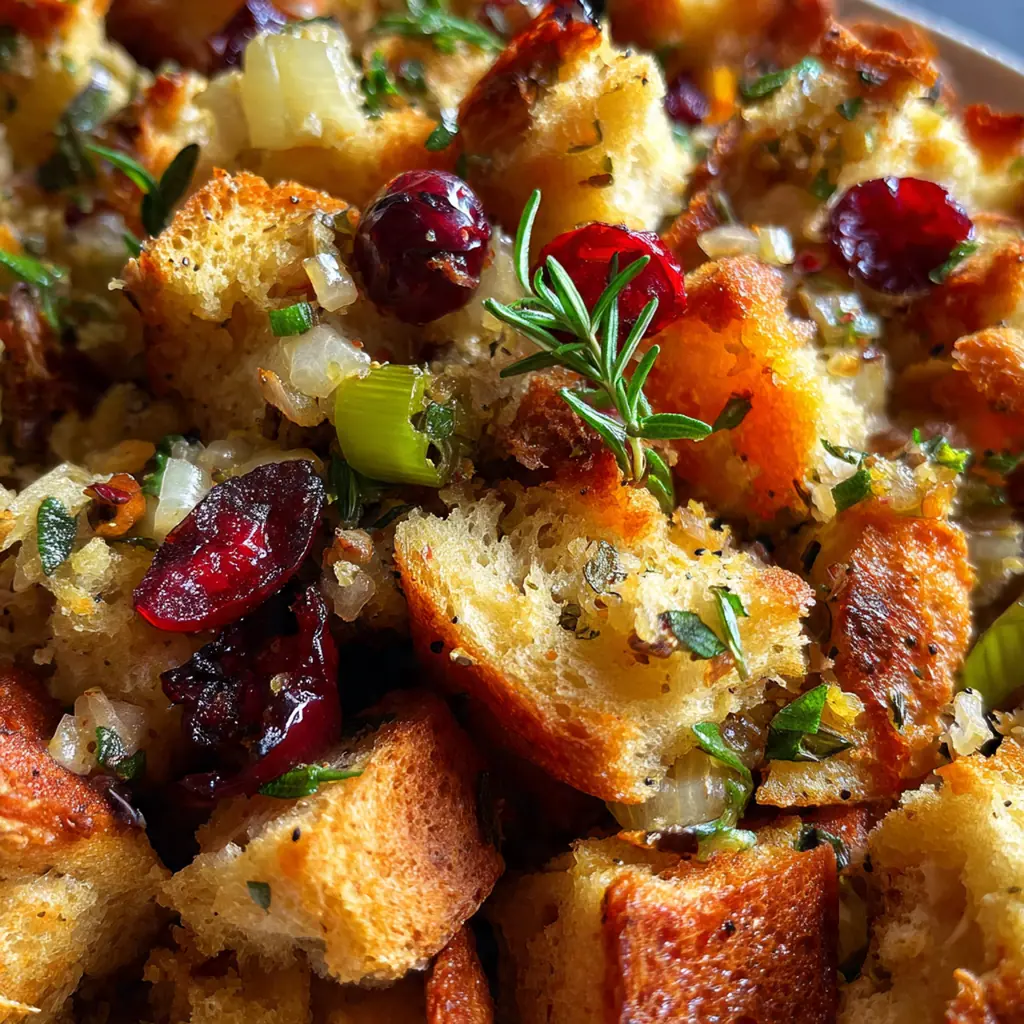
This ultimate Thanksgiving stuffing recipe is the heart of my family’s holiday table, a side dish with roots in American culinary tradition that everyone dreams of. It’s a beautiful balance of textures and flavors, from the crispy golden top to the savory, moist interior packed with sausage and herbs. I love that it’s a classic you can truly make your own, and it always feels like the centerpiece of the feast. Making it from scratch fills your kitchen with the most incredible aroma, a scent that just smells like home and celebration.
Why You'll Love This Recipe
- You get that perfect contrast of a crisp top and tender, moist interior
- It’s packed with savory, herby flavor from a trio of fresh sage, thyme, and parsley
- The sweet sausage and toasted pecans add so much delicious depth and crunch
- You can assemble it a day ahead for a much easier Thanksgiving morning
- This is the comforting side dish that truly makes the holiday meal complete
Ingredients You’ll Need
- Day-old rustic bread like sourdough: it has a sturdy crumb that soaks up the broth without turning to mush, giving your stuffing the perfect texture.
- Unsalted butter: it provides a rich, savory foundation for cooking the vegetables and adds incredible flavor and moisture to every bite.
- Sweet Italian sausage: this adds a foundational savory meatiness and a touch of sweetness that pairs so well with the herbs.
- Yellow onions and celery: finely diced, they create the aromatic base that builds layers of flavor as they soften and turn golden.
- Fresh garlic: minced and added at the right moment, it gives a subtle pungent kick that ties all the savory elements together.
- Kosher salt and black pepper: essential for seasoning every component, bringing out the natural flavors of the sausage, vegetables, and herbs.
- Fresh sage, thyme, and parsley: these are non-negotiable for that signature holiday aroma; fresh herbs make the flavor pop in a way dried ones can’t.
- Low-sodium chicken or turkey broth: this is the key to moisture; using low-sodium lets you control the seasoning perfectly.
- Large eggs: lightly beaten, they act as a binder to help the stuffing hold its beautiful shape once baked.
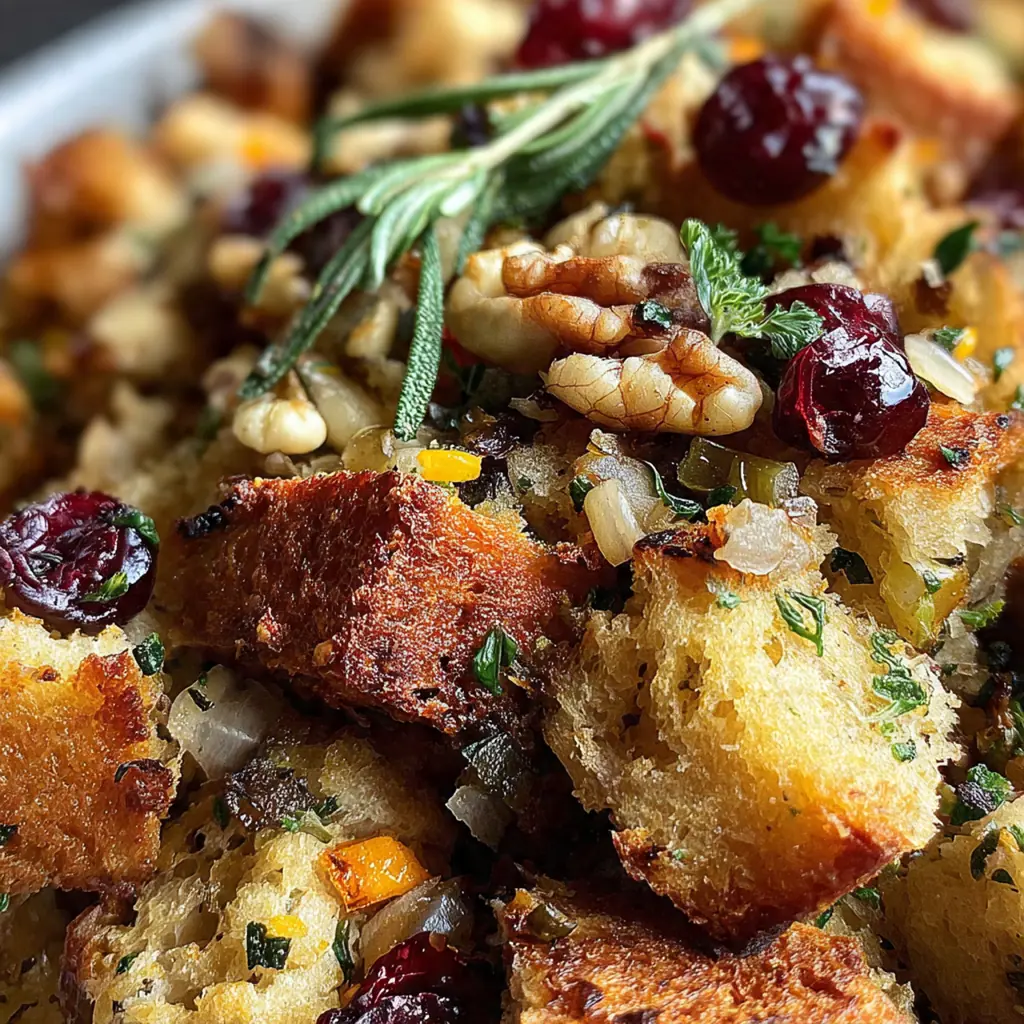
- Pecans: toasted and chopped, they introduce a wonderful crunch and a nutty richness that elevates the entire dish.
- Dried cranberries or tart cherries (optional): a sweet-tart pop that cuts through the richness and adds a festive burst of color.
How to Make It
Dry the Bread Cubes:
Preheat your oven to 250°F and spread your bread cubes in a single layer on baking sheets. Baking them low and slow for 45-60 minutes drives out all the moisture, which is the secret to stuffing that soaks up the broth without getting soggy. Let them cool completely before you start mixing; they should feel like sturdy croutons.
Brown the Sausage:
In your large skillet, melt a couple tablespoons of the butter over medium heat. Add the sausage, breaking it up with a spoon, and cook until it’s nicely browned and cooked through. Use a slotted spoon to transfer it to your giant mixing bowl, leaving those flavorful drippings behind in the pan.
Cook the Aromatic Vegetables:
Add the rest of the butter to that same skillet with the sausage drippings. Once it melts, add your diced onions and celery. You’ll cook these, stirring often, until they’re very soft and just starting to turn golden at the edges; this builds a ton of flavor. Stir in the garlic, salt, and pepper for one more minute until fragrant, then mix in the fresh sage and thyme.
Combine the Dry Components:
Pour that entire buttery vegetable mixture right over the bread and sausage in your bowl. Add the parsley and toasted pecans, and the dried cranberries if you’re using them. Now, use your hands or a big spoon to toss everything gently until it’s evenly combined; this ensures every bite will have a bit of everything.
Moisten with Broth and Eggs:
In a separate bowl or large measuring cup, whisk together 2 ½ cups of the broth and the beaten eggs. Pour this evenly over your bread mixture. Here’s where you get your hands in there—gently toss and fold until the liquid is absorbed and the mixture feels moist but not swimming. If it seems dry, add the remaining broth a little at a time until it holds together when you give it a light squeeze.
Transfer and Bake Covered:
Grease your 9×13-inch baking dish and transfer the stuffing mixture into it, pressing it gently into an even layer. Cover the dish tightly with aluminum foil—this initial covered bake is what steams the stuffing, cooking the eggs and making the interior wonderfully tender and moist.
Uncover and Bake Until Golden:
After 30 minutes, carefully remove the foil. Your kitchen will already smell amazing. Now bake it uncovered for another 20-30 minutes so the top can transform into that irresistible, golden brown, crispy crust we all fight over. For extra crispness, a brief minute under the broil works wonders, but watch it like a hawk.
Rest and Serve:
Take the baking dish out of the oven and let your Thanksgiving stuffing rest for a full 10 minutes. This allows everything to set up perfectly so it slices neatly. Then, garnish with a little extra parsley if you like, and get ready to serve the star of the side dish show.
You Must Know
- Drying your own bread cubes is the single biggest factor for perfect texture
- Toast the pecans first to unlock their deepest, nuttiest flavor
- Use your hands to mix the stuffing; it’s the gentlest way to distribute moisture
- Let it rest after baking so it slices beautifully
- I never skip the fresh herbs, they make all the difference
Storage Tips
Store any leftover Thanksgiving stuffing in an airtight container in the fridge, where it’ll stay good for up to four days. To reheat, I always use the oven—cover it with foil and warm it at 350°F until it’s heated through, which brings back its texture way better than a microwave. You can also freeze the fully baked and cooled stuffing for up to three months; just thaw it overnight in the fridge before reheating. Honestly, the leftovers might be my favorite part, perfect for a next-day sandwich with turkey and cranberry sauce.
Ingredient Substitutions
For the bread, any sturdy day-old loaf works—a rustic white, ciabatta, or even a good whole grain will do the trick, just avoid very soft sandwich bread. If you don’t have sweet Italian sausage, a mild breakfast sausage works well, or for a different twist, try a spicy Italian variety. No fresh herbs? In a pinch, use about one-third the amount of dried (so 2 teaspoons dried sage, 1 teaspoon dried thyme), but add them when you cook the vegetables to help them revive. For a nut-free version, simply omit the pecans—the stuffing will still be fantastic. To make it gluten-free, swap in your favorite gluten-free bread cubes, and for dairy-free, use a high-quality plant-based butter alternative.
Serving Suggestions
This Thanksgiving stuffing is, of course, the perfect partner to your golden roast turkey and a generous pour of rich gravy. I love it on a plate alongside creamy mashed potatoes, a scoop of tangy cranberry sauce, and some green bean casserole for the full holiday experience. It’s also incredible the next day, warmed up and served with a fried egg on top, or stuffed into a leftover turkey sandwich with a swipe of mayo. Don’t be shy about making a double batch because it disappears faster than you’d think.
Cultural Context
Stuffing, or dressing, is a cornerstone of the American Thanksgiving table, with roots that trace back to ancient Roman cooks who stuffed birds with mixtures of herbs, spices, and other ingredients. The version we know today, baked in a dish alongside the turkey, evolved as a practical way to serve more people and capture all those incredible pan juices. Every region and family puts their own stamp on it—some add oysters, others cornbread or apples—but this sausage and herb version is a beloved classic that represents the heart of the holiday’s comforting, communal feast. It’s more than a side dish; it’s a taste of tradition and shared memory.
Pro Tips
- The amount of broth you need depends entirely on your bread, so add it gradually
- For the crispiest top ever, let the stuffing bake uncovered for the final 10-15 minutes
- Make the entire recipe up to the baking step a day ahead and refrigerate
- Let the toasted bread cubes cool completely before adding any liquid
- I always make a little extra herb butter to brush on top before the final bake
Frequently Asked Questions
For the best texture, use a day-old, sturdy rustic bread like sourdough or French bread. These types hold their shape well when cubed and absorb the flavorful broth and egg mixture without becoming mushy, giving you that perfect contrast of a crisp top and a moist, tender inside.
Absolutely! You can assemble the stuffing the night before. Just mix all the ingredients except the broth and eggs, cover, and refrigerate. When you’re ready to bake, whisk the broth and eggs together, pour it over the bread mixture, stir, and then bake. This makes your Thanksgiving morning much smoother.
If you prefer a different protein, you can use mild or hot Italian sausage, or even ground turkey. For a vegetarian version, omit the sausage and use 8 oz of sautéed mushrooms for a rich, savory flavor. You may also want to use vegetable broth instead of chicken broth.
The stuffing is done when the top is a deep, golden brown and crisp to the touch. A knife or skewer inserted into the center should come out clean (not wet), indicating the eggs are fully set. It typically takes about 60 minutes in a 375°F oven.
Thanksgiving stuffing is the quintessential holiday side dish. Serve it alongside roast turkey or turkey breast, creamy mashed potatoes, cranberry sauce, and green bean casserole for a classic American feast. It also pairs wonderfully with roasted vegetables and gravy.